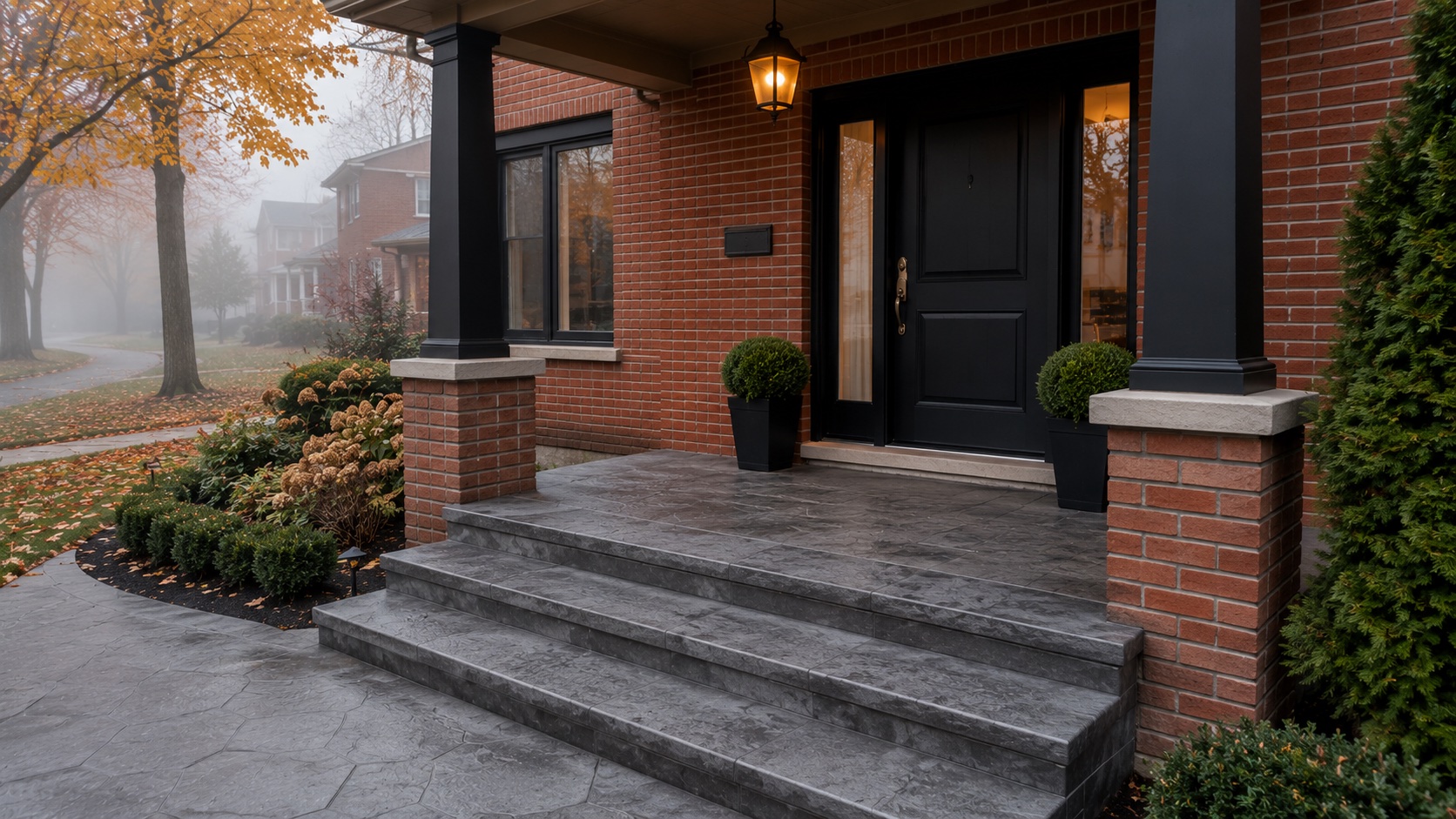
Of every question we get from Toronto homeowners, this one comes up the most: "What is that finish, and how is it possible without ripping out the old concrete?"
The answer, in most cases, is a product called Jewelstone — a polymer-modified decorative concrete overlay engineered specifically for residential and commercial concrete resurfacing. It's the system behind a significant share of the porch, stair, pool deck, and patio transformations you see across the GTA, and the one Artisan Coat has been installing as an authorized installer for over a decade.
This guide breaks down exactly what Jewelstone is, how the installation actually works, what it costs in 2026, and how to tell whether it's the right system for your property.
What Jewelstone Actually Is
Jewelstone is a polymer-modified cementitious overlay system. In plain terms: it's a thin layer of specially engineered concrete that's applied directly over your existing concrete surface. The product combines high-strength cement, polymer resins, fine aggregates, and integral colour pigments. Once installed and sealed, it becomes a permanent decorative surface that bonds to your existing slab.
The polymer modification is what makes it special. Standard concrete is brittle, doesn't flex well with temperature changes, and tends to crack when applied as a thin layer. Polymer-modified concrete is far more flexible, bonds aggressively to existing concrete, and resists the kind of micro-cracking that wrecks ordinary thin overlays in a Canadian climate.
The system isn't paint. It isn't an epoxy. It isn't a sealer. It's a structural decorative surface that becomes permanently part of your concrete.
Why GTA Homeowners Choose It
Jewelstone wasn't the first decorative overlay system on the market, and it isn't the only one. So why is it the system we install most often? A few specific reasons:
- Engineered for cold climates. Many overlay systems are formulated in warmer markets (the US south, southern Europe). Jewelstone holds up specifically against freeze-thaw cycling, which is the #1 cause of decorative concrete failure in Canada.
- Pattern flexibility. Unlike spray-on coatings that mimic texture only, Jewelstone is hand-stamped or troweled into authentic patterns — herringbone, slate, flagstone, brick, ashlar — with real depth and dimension.
- Colour stability. Pigments are integral to the mix, not painted on top. That means the colour doesn't fade or wash off the way a stained surface does.
- Bonds to existing concrete. The overlay isn't sitting on top of your concrete — it's chemically bonded to it. Done correctly, it becomes part of the slab.
- Long lifespan when properly sealed. Expect 10–20+ years with regular maintenance and resealing.
How a Jewelstone Installation Actually Works
The process is more involved than most homeowners realize. The finish gets the attention, but it's the prep work underneath that determines whether the surface lasts 3 years or 20.
Step 1 — Surface Diagnosis (Day 1)
Before any product is opened, we evaluate the existing concrete: substrate condition, cracks, structural soundness, drainage, moisture content. This determines what kind of prep is needed and whether Jewelstone is even the right call. If the substrate is failing, no overlay in the world will save it — replacement is the honest answer in those rare cases.
Step 2 — Mechanical Prep
The existing concrete is mechanically profiled — usually with a diamond grinder or shot blaster — to open the surface and give the overlay something to bond to. This is the step that separates a 20-year installation from a 2-year one. Skipping it (or doing it poorly) is the single most common reason decorative overlays fail.
Step 3 — Repair & Levelling
Cracks are routed and filled. Spalled areas are rebuilt. Low spots are levelled. Any structural issues are addressed. The substrate must be sound before any decorative work begins.
Step 4 — Bond Coat
A polymer-rich primer layer is applied to chemically lock the new overlay to the existing concrete.
Step 5 — Base Coat & Pattern Application
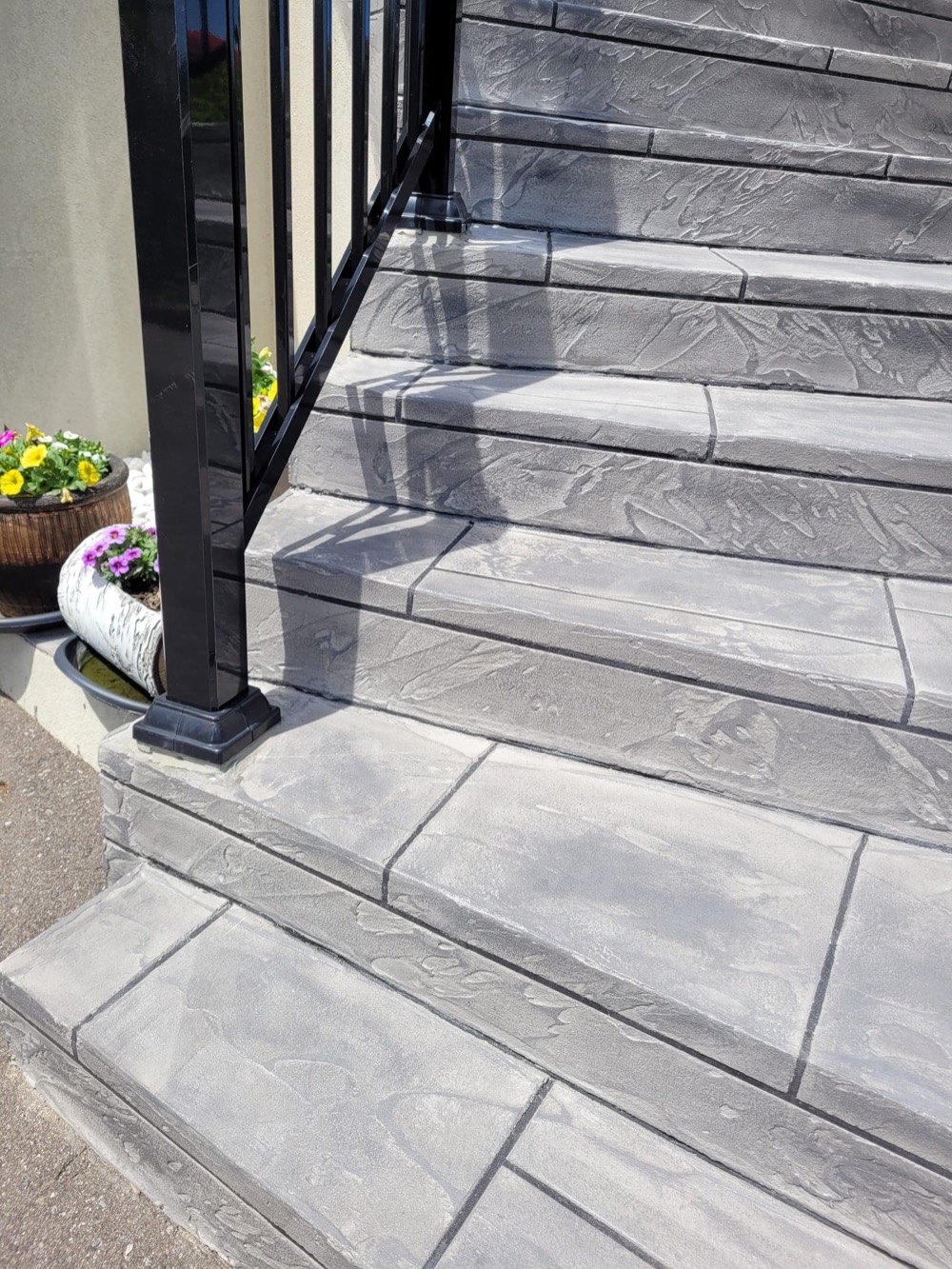
The Jewelstone overlay is troweled or sprayed on, then hand-stamped into the chosen pattern while it's still workable. This is where skill matters most. The stamping pattern, the timing, the consistency of the trowel work — all of it is craft. There's no machine doing this for you.
Step 6 — Colour & Detail Work
Accent colours, grout-line colour, and contrast detailing are added once the base has set. This is where a single beige overlay becomes a multi-tone, dimensional finish that reads like real stone.
Step 7 — Sealing
Two coats of specialized sealer lock everything in. The sealer is what determines moisture resistance, stain resistance, and freeze-thaw durability. Cutting corners here is how decorative concrete fails in 3 winters.
Where Jewelstone Works (and Where It Doesn't)
Best Use Cases
- Front porches and steps — by far the most common application. The combination of high visibility and high foot traffic plays to Jewelstone's strengths.
- Pool decks — slip-resistant texture options, water-resistant performance, and cooler-than-stone underfoot in summer.
- Patios & walkways — pattern flexibility allows for designs that match the architectural character of the home.
- Stairs and stair landings — the system handles vertical surfaces and tread/riser combinations cleanly.
- Driveways — possible with the right substrate and the right sealer system, though heavy-traffic driveways need careful spec.
When Jewelstone Isn't the Right Call
- Concrete with severe structural failure or major settlement — fix the substrate first.
- Surfaces with significant moisture migration from below — that water needs to go somewhere, and an overlay will fail if it's trapping it.
- Indoor spaces where seamless aesthetics are wanted — that's a microcement application, not a Jewelstone one.
The product itself is only half the story. Jewelstone in the hands of an inexperienced applicator produces a surface that looks fine at handover and starts failing within a year. The same product, applied by a skilled crew with proper prep, lasts decades. When you're getting quotes, ask about prep, ask about sealer, and ask to see real installations that are at least 5 years old.
What Does Jewelstone Cost in the GTA in 2026?
Pricing depends on the surface area, the existing condition, the complexity of the pattern, and how much repair work is needed before the overlay goes down. General ranges from Artisan Coat for 2026:
- Front porch and stairs (typical residential): $4,000 – $8,500
- Pool deck (200–400 sq ft): $7,000 – $14,000
- Patio (200–400 sq ft): $5,500 – $11,000
- Walkway: $2,800 – $6,500
- Driveway (smaller): $9,000 – $18,000
For comparison: full demolition and replacement of any of these surfaces typically runs 40–60% higher than the resurfacing equivalent. And resurfacing is significantly less disruptive — no demolition, no waste hauling, no excavation, no curing wait.
Jewelstone vs. Stamped Concrete vs. Spray Coatings
Homeowners often confuse these three. They're not the same.
- Stamped concrete: Full new concrete pour, with patterns stamped while wet. Requires demolition and replacement of the existing slab. Much more expensive and disruptive.
- Spray-on coatings: Thin spray-applied layers that mimic texture from a distance. Easy to install, much less durable. These are the systems you see fail within 2–3 winters in the GTA.
- Jewelstone overlay: Thick polymer-modified overlay applied over existing concrete, hand-stamped into real patterns. The middle ground between full replacement and cheap coatings — but with the durability of a structural surface and the cost of a cosmetic one.
How to Tell If Your Concrete Is a Good Candidate
Most concrete in the GTA that isn't structurally failing is a viable candidate for Jewelstone. The honest answer for the rest requires an in-person look. Generally we look for:
- The substrate is structurally sound (no major settlement, no widespread structural cracking).
- Surface damage is limited to spalling, hairline cracking, sealer failure, or aesthetic wear.
- Drainage works (water flows off the surface, doesn't pool indefinitely).
- No active moisture migration from underneath.
If you've got photos, send them on WhatsApp. We can usually tell from a few clear shots whether your concrete is a good Jewelstone candidate — and if it isn't, we'll tell you that too. The wrong recommendation costs more in the long run than no work at all.