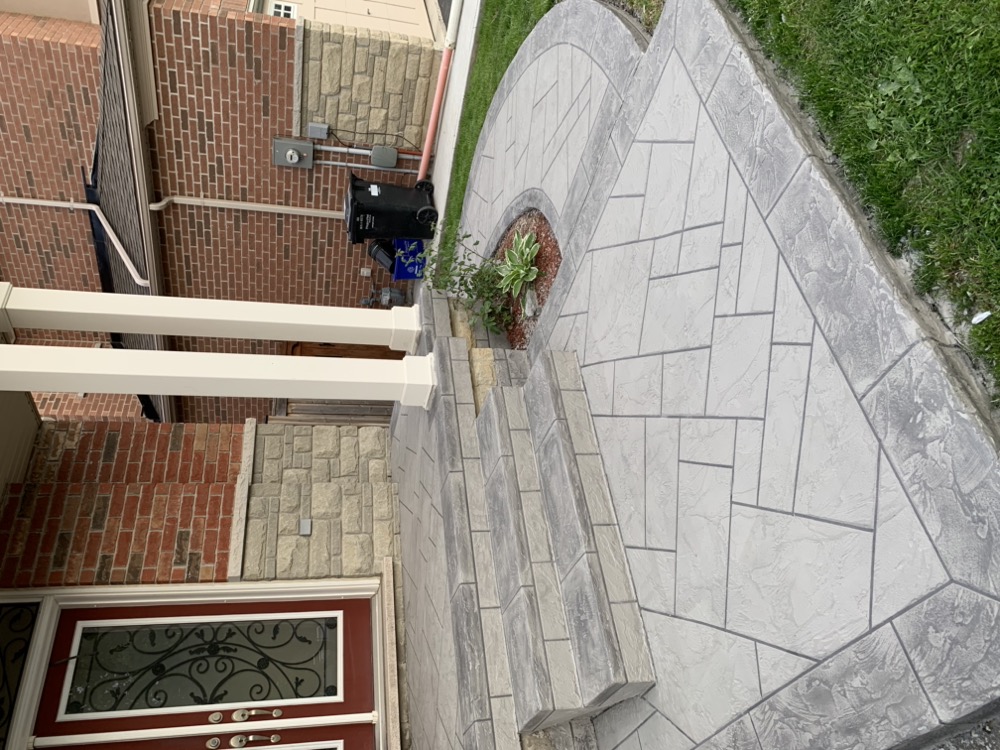
Drive through almost any established neighbourhood in Toronto, Mississauga, or Oakville right now and something is noticeably different. Front porches, pool decks, and driveways that would have been poured grey a decade ago are now finished in rich charcoal stone patterns, warm sandstone textures, and seamless borderless designs that look like they belong in an architectural magazine.
Decorative concrete resurfacing — specifically polymer-modified overlay systems applied over existing surfaces — has made high-end surface finishes accessible to standard residential projects without the cost of natural stone or the mess of full demolition. Here are the seven exterior concrete design trends we're seeing most in the GTA right now.
Dark Charcoal Stone Pattern — The New Standard
If there's one finish that's defined GTA exterior design in 2025–2026, it's dark charcoal with a natural stone pattern. Think deep slate grey with subtle variation — not flat paint-grey, but a colour with depth and texture that reads differently in morning light vs. evening.
Applied as a Jewelstone decorative overlay, this finish has become the dominant choice for front porches and stairs across Toronto's older residential neighbourhoods. It works universally — against brick, stone, stucco, siding — and dramatically elevates curb appeal without clashing with existing architecture.
Why it works: Dark tones hide wear and salt staining better than lighter colours in the GTA climate. The stone pattern breaks up the flatness of plain concrete. And the overall effect is premium without being trendy.
Warm Sandstone and Terracotta Textures
After years of grey domination, warm tones are making a strong comeback — particularly for homes with warmer brick tones, red-brick colonials, and traditional architecture. Sandstone, warm beige, and terracotta-influenced finishes in a natural stone or travertine pattern are appearing more frequently on porches and pool decks in Mississauga, Oakville, and Burlington.
The appeal is clear: these tones feel natural and timeless without looking dated. Paired with contrasting dark iron railings or black window frames, the warm stone finish reads as high-end and deliberate rather than generic.
Where we're seeing it: Pool decks and backyard patios especially — the warm tones complement landscaping and natural surroundings better than grey.
Borderless Pool Decks with Seamless Transitions
Traditional pool decks had a clear visual break — the deck, the edge, maybe a coping strip, then the pool. The newer approach eliminates these transitions as much as possible, creating the visual impression that the surface flows continuously into the water.
This is achieved by carrying the same decorative overlay colour and pattern across the entire pool surround — with flush edges rather than raised coping where possible — and using a slip-resistant version of the finish in a cohesive colour palette. The effect is significantly more sophisticated than the dated beige concrete decks that dominate older GTA pool installations.
Two-Tone Colour Blocking on Porches
Where most decorative concrete jobs use a single colour throughout, colour-blocking — using two complementary colours in defined zones — is creating distinctive, architectural results on front porches and multi-level entryways.
The most common execution: a darker colour on the flat porch surface (charcoal, dark grey), with a lighter accent on the riser faces of stairs (light grey, warm tan, or off-white). The contrast creates visual definition and depth that makes a standard front porch look considered and designed rather than utilitarian.
This also has a practical advantage — lighter riser colours improve visibility for step edges, which matters at night and for older visitors.

Driveway Banding and Border Contrasts
Plain grey driveways are one of the most underutilized curb appeal opportunities in residential real estate. A simple technique — applying a contrasting decorative band or border around the perimeter of a driveway, or creating a panel pattern within the surface — transforms an unremarkable driveway into an intentional design feature.
We're seeing this most with dark interior panels (charcoal or dark grey overlay) with lighter borders in warm tan or off-white, or the reverse — a lighter main field with dark charcoal borders that define the edges cleanly. The cost difference between a plain resurfacing and a banded design is modest, but the visual impact is significant.
Restored Heritage Entryways with Stone-Look Patterns
Older GTA homes — particularly in established Toronto neighbourhoods like The Beaches, Leaside, and Etobicoke — have front entrances that have been poured, patched, and forgotten over decades. The concrete is often uneven, cracked, and visually inconsistent.
What's trending is full-width porch and stair resurfacing in stone-pattern overlays that honour the character of these older homes without looking like modern cookie-cutter finishes. Warmer greys, cobblestone and flagstone patterns, and carefully matched colours that complement original brick have become a way of restoring rather than renovating — keeping the home's heritage feel while dramatically improving the condition and appearance of the entrance.
Continuous Surfaces from Interior to Exterior
Perhaps the most sophisticated trend: carrying the same material language from inside to outside. A microcement interior floor that flows to a decorative concrete exterior threshold, or an indoor feature wall finish that's echoed in the outdoor fireplace surround — creating a deliberate visual continuity between spaces.
This requires coordination between interior and exterior application, and the materials used indoors versus outdoors are necessarily different (microcement inside, polymer-modified overlay outside). But the colour palette, texture direction, and overall aesthetic can be designed to flow — blurring the boundary between inside and out in a way that's becoming the hallmark of high-end GTA renovations.
What's Replacing Plain Grey in the GTA
The common thread across all seven trends: intentionality. Homeowners who are investing in their exterior surfaces want the result to look like a design decision, not a default. They want texture, depth, and colour that works with their home's architecture — not just fresh concrete that will crack and stain within three years anyway.
Decorative concrete resurfacing makes all of these finishes possible — over existing concrete, without demolition, and at a cost that makes the upgrade financially sensible.