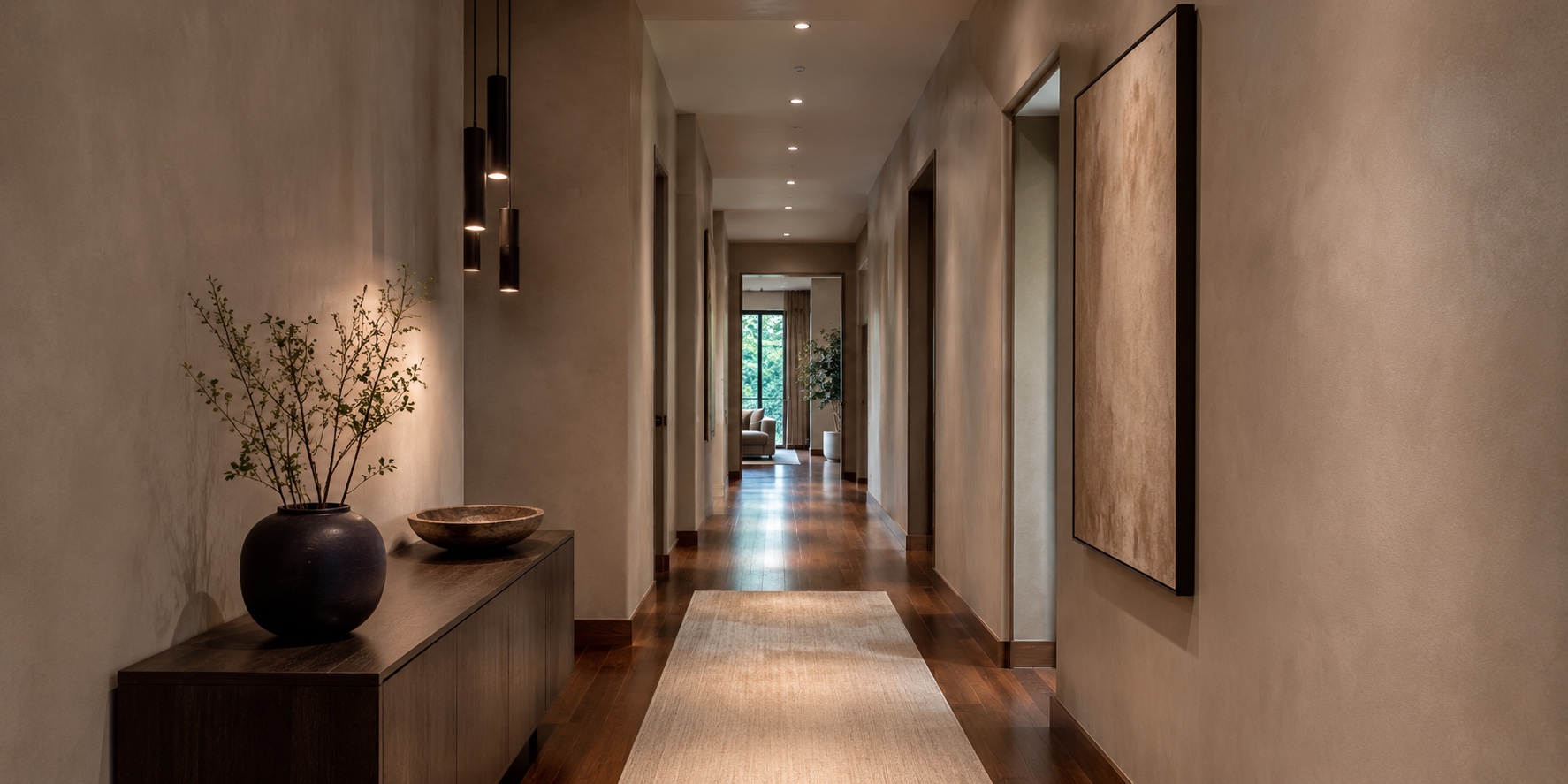
Walk into almost any recently renovated home in Rosedale, the Annex, or Forest Hill right now and you'll notice it: a single wall — sometimes a bathroom, sometimes a living room feature — finished in a continuous, seamless material that looks somewhere between polished stone and raw concrete. It has no grout lines. No seams. No visible joints. And it photographs beautifully.
That material is microcement. And it's no longer just a European luxury trend. It's arrived in Toronto, and homeowners across the GTA are choosing it for bathrooms, kitchens, feature walls, and shower enclosures at a pace we haven't seen before.
What Is Microcement, Exactly?
Microcement (sometimes called micro-concrete or micro-topping) is an ultra-thin coating — typically 2–3mm — applied directly over existing surfaces. It's composed of cement, fine aggregates, resins, and pigments. When professionally applied and sealed, the result is a completely seamless, waterproof surface with a refined texture and depth that no tile or paint can replicate.
Unlike standard concrete, microcement is flexible enough to go over existing tile, drywall, plywood, and even some painted surfaces without the need for demolition. A skilled applicator can transform a tiled bathroom wall in 2–3 days — with no debris, no reconstruction, and none of the mess or cost of a full gut reno.
"The walls look like they're made from a single piece of stone. There's no grout to clean, no lines to distract the eye. It changed the whole energy of the room."
— Microcement client, Toronto's Annex neighbourhood
Why Accent Walls — and Why Now?
The accent wall has always been about creating focal depth without rebuilding a room from scratch. What microcement does is elevate that concept to a completely different level. Here's what's driving the trend in 2026:
- The end of grout lines. Tile has dominated bathrooms for decades, but grout lines date a space almost immediately. Microcement eliminates every seam, creating an unbroken visual flow that photographs like a magazine.
- The quiet luxury movement. Across Toronto's design community, there's a strong shift away from loud patterns and toward calm, textural materials. Microcement — with its subtle variation and matte depth — fits perfectly.
- Warmth without wood. Warm grey, taupe, sand, and terracotta microcement shades add tactile warmth that paint simply cannot. It's the same impulse as bare concrete or exposed brick, but far more refined and controllable.
- It works in small spaces. A seamless wall makes a small bathroom feel larger, not smaller. Grout lines chop up the visual field. A continuous microcement surface expands it.
- Cost vs. full renovation. A full bathroom renovation in Toronto typically runs $15,000–$30,000, and $30,000–$45,000 or more for a large ensuite. A microcement accent wall or full bathroom microcement application is a fraction of that — while delivering results that look comparable to high-end boutique hotel finishes.
Where GTA Homeowners Are Using It
Bathroom Feature Walls
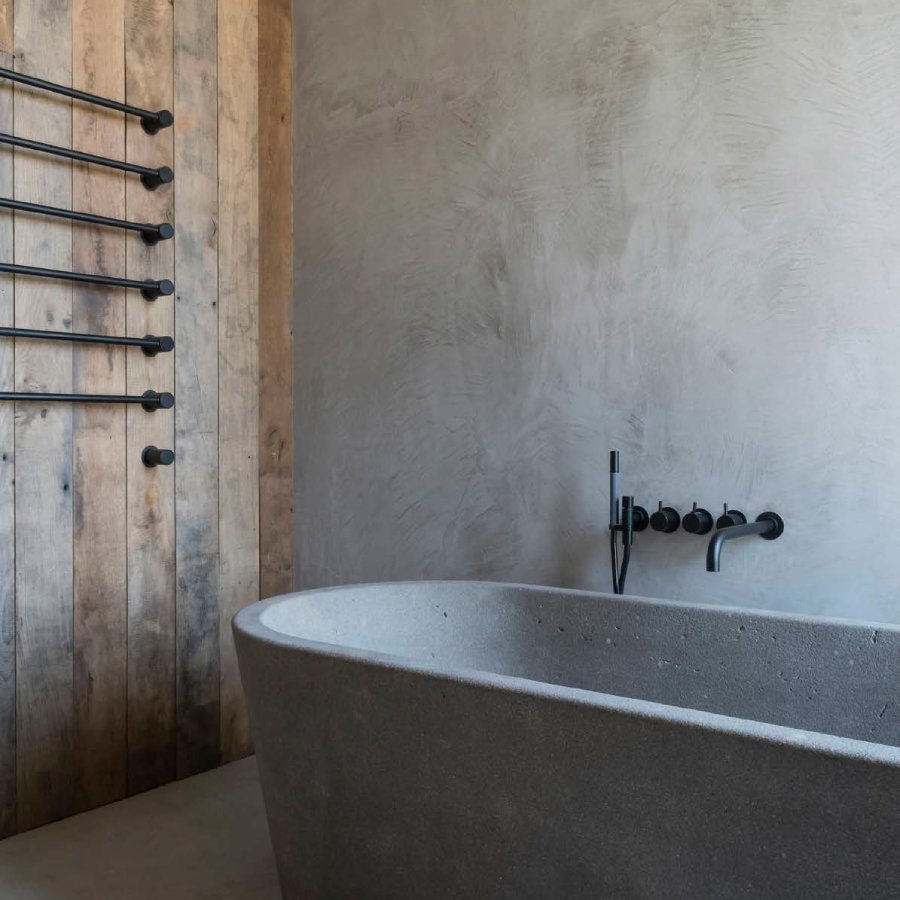
The most popular application. A microcement feature wall behind a freestanding tub or vanity turns a standard bathroom into something worth showcasing. Paired with matte black fixtures and warm lighting, the effect is genuinely striking. The material is waterproof when sealed correctly, making it fully suitable for wet environments.
Shower Enclosures
Perhaps the most dramatic application. A full microcement shower — floor, walls, and ceiling — with no visible joints or grout creates an interior that looks like it belongs in a high-end spa. The key is proper application technique and the right sealer — this is not a DIY project. Poorly applied microcement in a wet zone will fail quickly.
Living Room and Dining Room Feature Walls
A single microcement wall in a living room — behind a TV unit, flanking a fireplace, or as the main backdrop of a dining area — creates depth and texture that paint, wallpaper, or tile can't match. It's subtle enough to let furniture lead, but distinctive enough to anchor the room.
Kitchen Backsplashes
Microcement backsplashes are the seamless alternative to subway tile. Applied in a single continuous surface from countertop to cabinet, they're easy to wipe clean and dramatically cleaner-looking than tiled alternatives with grout gaps.
Fireplace Surrounds
A fireplace surrounded in warm-toned microcement is one of the most stunning residential applications. The material's ability to handle moderate heat (when applied correctly away from direct flame) and its textural similarity to natural stone make it a favourite for fireplace wall redesigns.
Not all microcement is the same — and not all applicators are. The finish quality depends almost entirely on the skill of the person applying it. Microcement is unforgiving of poor technique. Poor application looks beautiful for about 60 days, then starts to show every flaw. When choosing who does the work, experience and precision aren't optional — they're everything.
Microcement Colour Trends in Toronto for 2026
The colour choices homeowners are making right now reflect the broader move toward warmth and restraint. The standout palettes:
- Warm Ash / Greige: A warm grey with undertones that shift between grey and beige depending on light. Works beautifully in bathrooms and living spaces.
- Terracotta and Clay: Warm, earthy tones that create a Mediterranean warmth. Currently dominant in dining rooms and powder rooms.
- Charcoal: Deep, dramatic, and masculine. Increasingly used in primary bathrooms and basement feature walls for a bold, hotel-like effect.
- White Marble Effect: A lighter microcement with subtle variation that mimics Carrara marble at a fraction of the cost — and without the grout lines.
- Taupe Mist: The most versatile neutral. Pairs with virtually any palette and reads differently in morning light versus evening.
What Does Microcement Cost in Toronto?
Cost depends heavily on the area being covered, the surface condition, and whether any prep work is needed. As a general guide for GTA homeowners in 2026:
- Feature wall (one wall, standard room): $1,800 – $3,500
- Bathroom walls and floor (mid-size): $4,500 – $9,000
- Full shower enclosure: $3,000 – $6,500
- Full bathroom microcement (walls + floor): $7,000 – $16,000
- Fireplace surround: $1,500 – $3,500
These are installation costs from a skilled applicator in the GTA using a standard system. Premium microcement products cost more and can bring the price to $40–$45 per square foot. Material alone is a fraction of this — but microcement is one of those materials where the labour quality determines everything. A cheap application will cost far more to fix than it saved.
What to Look for in a Microcement Contractor
Not every contractor who says "we do microcement" has the skill to deliver a finish worth living with. Here's what to look for:
- Portfolio with in-person references. Ask to see completed bathrooms and walls in person. Photos are too easy to manipulate.
- Surface prep expertise. Microcement adheres to the substrate it's applied to. If the substrate isn't perfect, the finish won't be either. The best applicators spend as much time preparing the surface as applying the coating.
- Sealer knowledge. The wrong sealer — or an under-applied one — will cause microcement in wet zones to stain, crack, and fail. Ask specifically about the sealing system they use and how many coats are applied.
- Clear contract with material specs. Know exactly what product is being used, how many coats, and what the warranty covers.