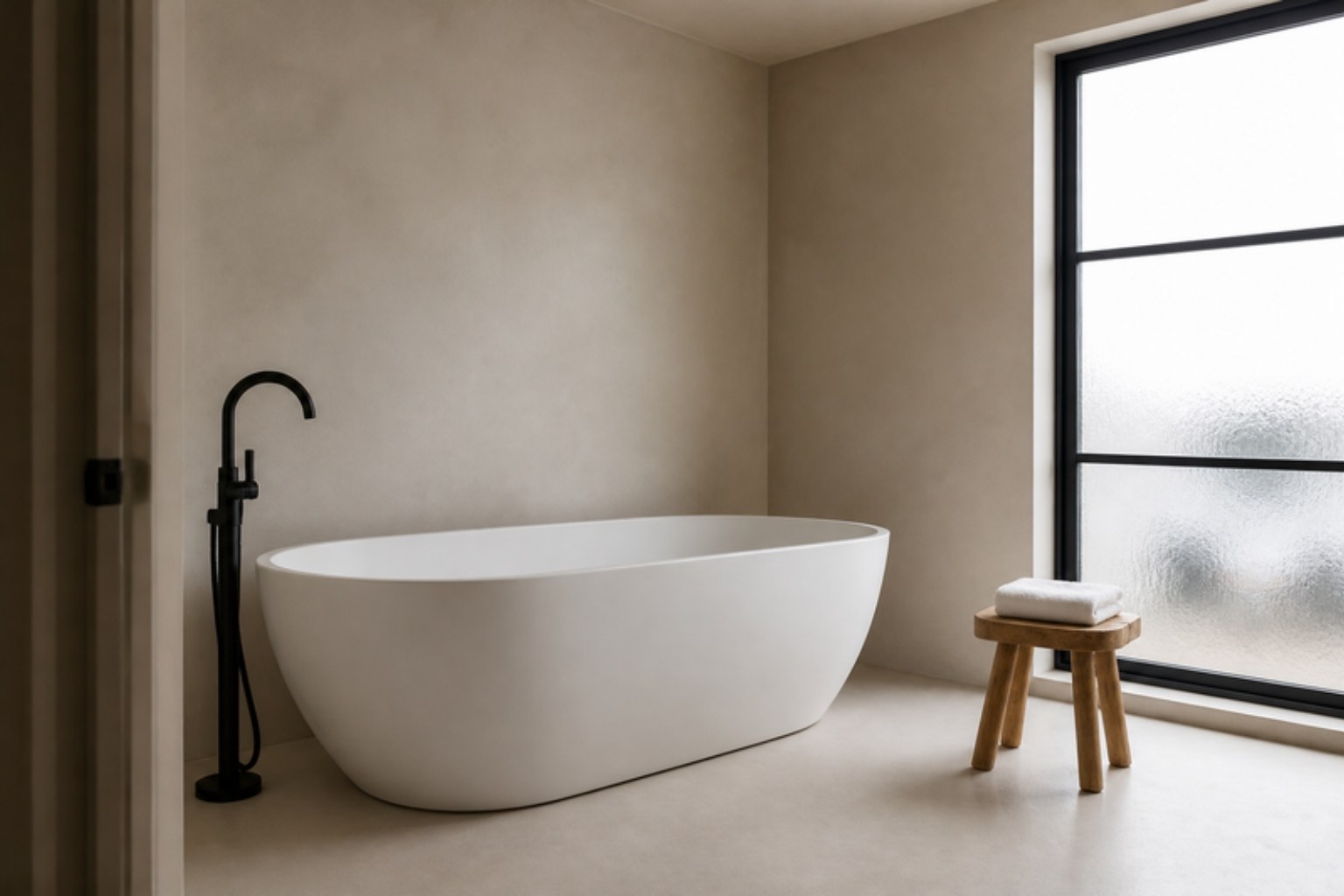
Look at the wall around your bathtub right now. Chances are the grout has gone grey, the caulk line is peeling, and one corner tile sounds hollow when you tap it. The tub surround takes more water than any other surface in the house, and tile with grout is the weakest way to cover it.
Designers across Canada are moving to continuous, grout-free walls in bathrooms, and microcement is how that gets built in the GTA. It is a thin mineral skin, 2–3 mm, troweled by hand and sealed. It goes right over your existing tile, so there is no demolition and no week without a bathroom.
Why GTA Homeowners Are Ditching Tile Around the Tub
Grout is a sponge with a schedule. Every joint is a place for water, soap scum and mould to sit. A tub wall with 80 square feet of tile can carry over 100 feet of grout line. A microcement surround has none.
Seamless looks bigger and calmer. Most Toronto bathrooms are small. When the tub wall, the niche and the ledge read as one carved surface, the room stops feeling chopped into pieces. That is the spa look people are paying for.
The colour has depth. Warm sand, stone grey, mushroom and deep charcoal are the tones we are asked for most. Because the colour is mineral and hand-troweled, it moves with the light. A glazed tile is the same flat colour all day.
“Our old tub tile was cracked and the grout was black at the base. The new surround went over it in four days. No dust storm, no tile in the dumpster, and I clean it with a sponge.”
— Artisan Coat client, Etobicoke, 2026
Microcement Bathtub Surround Cost in Toronto (2026)
Interior microcement walls in the GTA run roughly $15–$20 per square foot installed. Wet areas cost more because they need a full waterproofing system, extra coats and a higher-grade sealer. The numbers below are typical Toronto ranges; your quote depends on wall condition and tub type.
| Scope | Installed Cost (GTA, 2026) | Typical Timeline |
|---|---|---|
| Alcove tub, 3 walls, over existing tile | $2,400 – $4,000 | 3 – 4 days |
| Alcove tub, 3 walls, over new cement board | $2,800 – $4,800 | 3 – 5 days |
| Drop-in tub deck and apron, plus walls | $4,200 – $7,000 | 4 – 6 days |
| Freestanding tub feature wall with niche | $1,800 – $3,600 | 2 – 4 days |
| Full bathroom: tub, shower, walls and floor | $9,000 – $18,000 | 7 – 12 days |
For comparison, a quality tile tub surround in Toronto lands around $3,000–$6,500 once you include tile-out, waterproofing, new board and a tiler’s labour. Microcement sits in the same bracket and skips the demolition.
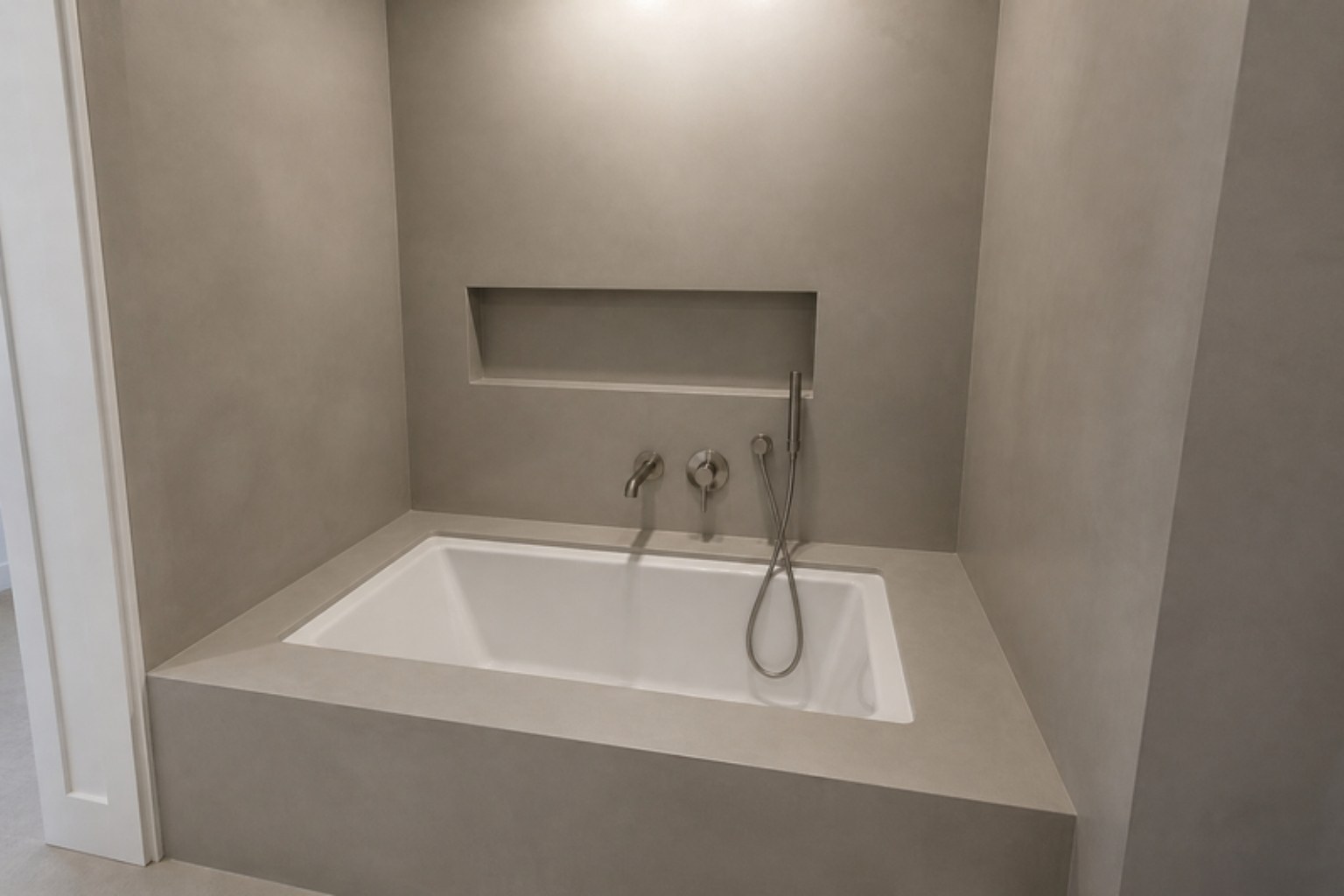
How a Tub Surround Is Built to Survive Water
The finish coat is what you see. The system underneath is what keeps it from failing in year three.
- Existing tile is keyed, filled and meshed. Glazed tile will not bond to a mineral coat on its own. We abrade it, fill every grout line flush with a bonding base and embed mesh so the old grid never shows through.
- The tub joint is a movement joint. Where the tub meets the wall, we leave a flexible sealant line, tooled clean. A tub shifts slightly when it fills. A rigid joint there is how cracks start.
- A waterproof membrane goes under the finish. In wet zones, microcement is the finish, not the waterproofing. A liquid membrane is applied first, then the coats on top.
- The sealer is wet-area rated. We use a two-coat, water-resistant sealer in the splash zone. A bedroom-grade matte sealer is not enough in a bathroom, and we do not use one.
- Fixtures are planned first. Spouts, handles and grab bars are marked and sealed around before finish, not drilled through afterward.
Do not let anyone skip the cure time. Microcement needs several days before it sees a full soak, and sealer needs time to harden. Running a hot bath on day two is the number one reason a surround fails early. We tell you the exact date your tub is back in service and put it in writing. If a contractor says “you can use it tonight,” get a second quote.
Daily Life With a Seamless Tub Wall
Cleaning: A soft sponge and pH-neutral cleaner. Skip abrasive powders, vinegar sprays and bleach — they dull the sealer. Squeegee the wall after a shower if you want it to look new for a decade.
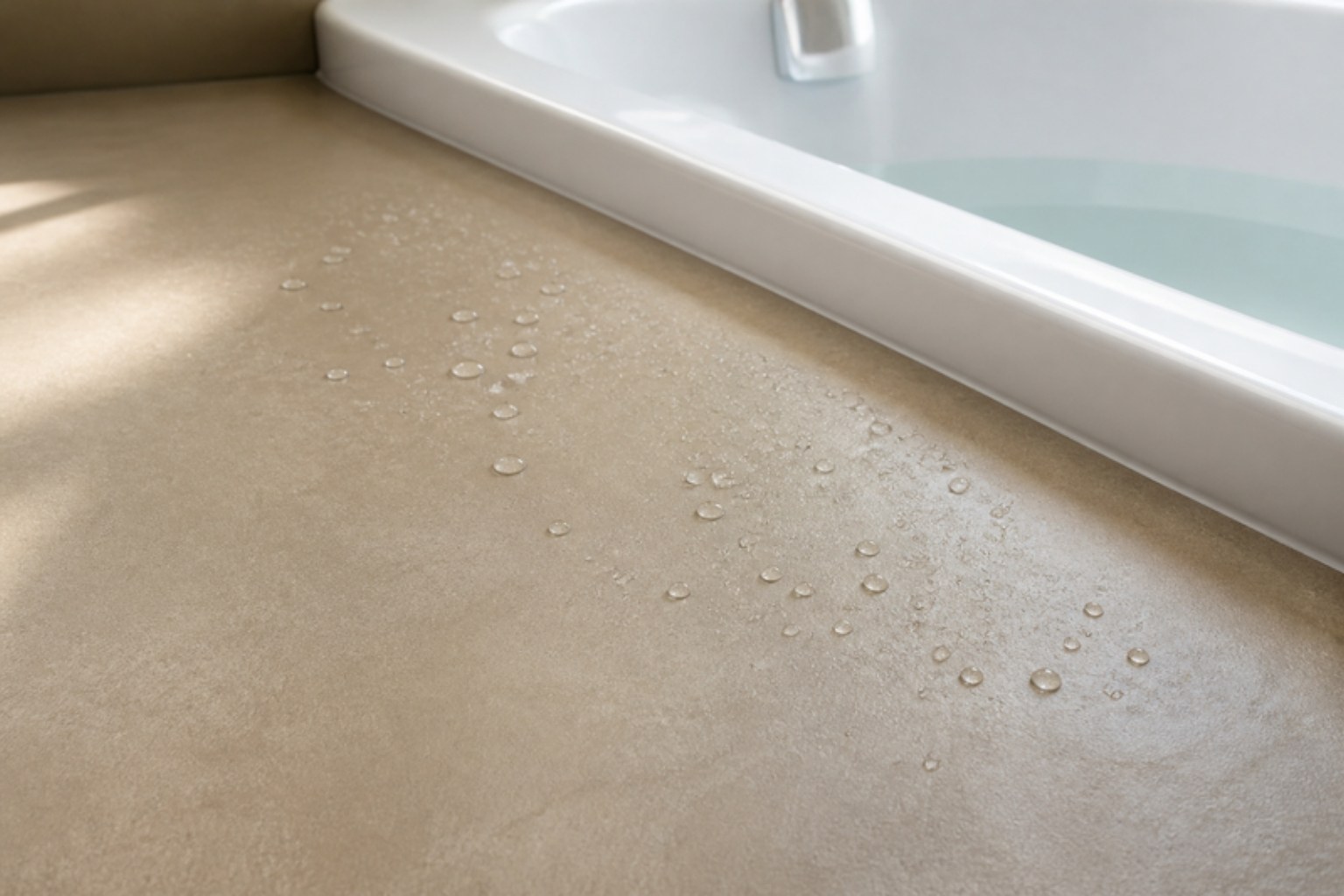
Water and soap: Sealed microcement sheds water. Hair dye, bath oils and strong bath bombs can stain if left to sit, so rinse after use.
Maintenance: Plan a fresh sealer coat every two to four years in a wet area. It is a one-afternoon job, not a rebuild.
When We Tell You to Keep the Tile
- The wall has a live leak or soft drywall. Fix the plumbing and the substrate first. Microcement does not cure a moisture problem behind the wall.
- The tub is cracked or moving. A flexing tub will crack any rigid finish. Replace or re-bed it first.
- You want a perfectly uniform, glossy look. Microcement is hand-troweled and has movement. That is the point, but it is not for everyone.
- Your budget is under about $2,000. Below that, the waterproofing and sealer minimums do not make sense. A clean tile re-grout is the better buy.
Where We Work
Artisan Coat finishes microcement bathtub surrounds, showers, vanities and full bathroom wraps across Toronto, Mississauga, Brampton, Vaughan, Oakville, Etobicoke, North York, Scarborough, Richmond Hill, Markham, Burlington and the wider GTA. Prep, membrane, finish and sealer are one system handled by one crew, with a 3-year written warranty.
The Short Version
A microcement bathtub surround replaces grout, tile-out and demolition with one seamless, water-resistant surface. In Toronto in 2026, an alcove tub over existing tile runs $2,400–$4,000, over new board $2,800–$4,800, and a freestanding tub feature wall $1,800–$3,600. Most jobs take three to five days.
Key the old tile, use a membrane, detail the tub joint as a movement joint, use a wet-rated sealer and respect the cure time. Get those right and the bathroom looks like a spa. Skip them and you have an expensive wall with a leak by spring.